
JavaScript and TypeScript (React and Node)
One language across the stack: React or Next.js on the front, Node with Express or NestJS on the back, usually with PostgreSQL.
Roles · Software Development
Engineers who take a feature from database to interface on their own, inside your codebase and your review process. Fewer handoffs, and fewer half-finished tickets waiting on someone else.
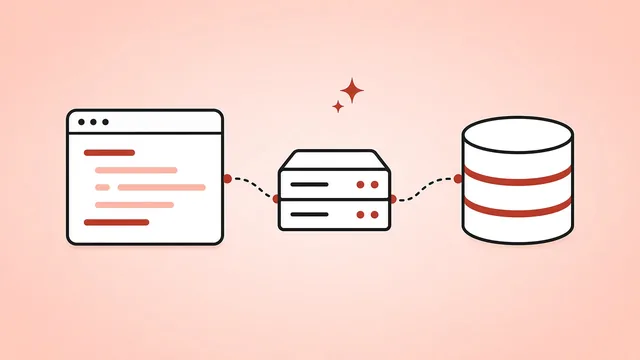
Most product work cuts across the stack: a new screen needs an endpoint, which needs a table, which needs a migration. When frontend and backend sit with different people, each feature waits on a handoff. A full-stack developer owns the whole slice, from schema to screen, and ships it.
What they do for you
Tools they work in
Strong answer: concrete choices about schema, API shape, state handling and tests, including one they'd now do differently.
Strong answer: measure first, then check the network waterfall, slow queries and missing indexes, N+1 queries and caching, before changing any code.
Strong answer: a backward-compatible migration, then a backfill in batches and code deployed in the right order, with a way back.
Strong answer: comments on correctness, security and readability, sorted into must-fix and nice-to-have.
Strong answer: environment variables or a secrets manager, never in the repo; least-privilege access; validated input; and they know which data is sensitive.
One language across the stack: React or Next.js on the front, Node with Express or NestJS on the back, usually with PostgreSQL.
Django for admin-heavy products and FastAPI for lean, quick APIs. A common choice when your product sits close to data or machine learning work.
Laravel applications with Blade, Livewire or a React or Vue frontend, plus queues, jobs and package upkeep.
Rails apps with Hotwire or a JavaScript frontend, background jobs, and careful upgrades across Rails versions.
ASP.NET Core web apps and APIs in C#, with Entity Framework and SQL Server or PostgreSQL, for companies built on Microsoft.
We agree the work, the tools, the hours you share and who they report to. For this role: your stack and versions, how your team reviews and deploys code, and the first feature you'd hand over.
We screen a wide pool for every role and introduce only the few who fit your brief. We source, screen and test candidates against your brief, and run background and reference checks. You interview and decide.
They start on the work in the brief, and we stay in contact once they've begun.
For a common stack, a full-stack hire usually takes one to three weeks. A rarer mix of frameworks or a lead-level role can take longer, since we may need to search further afield, and we tell you early if that happens.
You can bring on a full-stack developer under any of our ways to hire. Choose what fits your team, and we'll go over the details with you on the call.
Swipe to see more →
| Task | You | JiveTalent |
|---|---|---|
| Product priorities, code review standards and what ships | Own | – |
| Features, pull requests and tests | Review and merge | Your developer builds them, and our regular check-ins cover pace and team fit |
The common ones: React and Node, Next.js, Python with Django or FastAPI, Laravel, Ruby on Rails and .NET, with PostgreSQL or MySQL. If yours is less common, name it at the start and we'll say honestly whether we can find it.
The brief sets the hours and the overlap with your team before the search starts, so every candidate is hired for them.
Yes. They work in your repositories, branches and CI, and nothing reaches production without passing your review.
Talk to your account lead. We go through it with you and agree a way forward.
Yes. Mention the framework versions and any planned upgrade on the call, and we look for people who've done that kind of upgrade before.
You do. They commit to your repositories and deploy through your accounts, so you keep the history, the infrastructure and the credentials.
Their hours are tracked in the client app and reported there for you to see.
Book a call. We'll agree the brief for your full-stack developer and talk you through the ways to hire.